The holistic system of yoga is traditionally composed of eight interconnected components, often called “limbs.”
Some limbs are moral guidelines, others are actual physical practices, and still others are parts of the path to deepening your meditation.
Wellness is about achieving optimal health in every dimension of your life—physical, mental, emotional, and spiritual.
It is a continual active process that moves beyond good health into a state of thriving, fulfilment, and purposeful living.
Yoga addresses all of these areas with subtlety and precision.
“Oh, I tried a yoga class once and didn’t like it. Yoga is not for me.” This is a phrase we hear sometimes, and it couldn’t be further from the truth!
The sheer variety of yoga means that if you didn’t love your first class, usually this means that you simply haven’t found your perfect style yet.
The world of yoga offers a wide range of types, including: Hatha, Vinyasa, Iyengar, Kundalini, Yin, Restorative, and more.
[Carousel of small images: one showing a dynamic Vinyasa class (lots of movement), one showing a gentle Restorative class (using props, lying down), and one showing a close-up of a person peacefully doing seated breathing/meditation]
A younger, fitter person might be bored with a slow Restorative class, finding the lack of physical exertion “only for old people.”
Conversely, an older or less-fit beginner who tries a physically demanding Vinyasa Flow class might feel it’s too intense, demanding, and too strenuous for me.
Or if you are unlucky and attend a poorly trained yoga teacher without much experience, you may wonder why it seems just like a fitness class.
If you have tried a yoga class or two, and feel that it might not be for you, we encourage you to talk to someone knowledgeable about the various forms of yoga and explain what you thought was missing.
A challenging Vinyasa class might hook a fitness enthusiast right away, while a gentle class including breath work, awareness, and relaxation may be a profoundly healing experience for someone seeking to de-stress.
Don’t give up after your first try—there is such a range to different types of yoga classes, that it is worth trying a few different types.

The benefits of yoga extend far beyond touching your toes or increasing your flexibility.
It is an incredibly effective tool for both prevention and cure—but remember, it is ten times better at prevention than cure.
It’s more effective to practice yoga daily to prevent stress and anxiety, than to wait until you are run down.
Physical Benefits
Mental and Emotional Benefits
By incorporating these practices into your everyday life, you not only improve your health but also increase your willpower and deepen your awareness of the positive effect they have on you.
It shifts the emphasis from striving in the external world to becoming more in touch with your inner world. Which ultimately leads to inner peace and connection and to happiness as well as contributing successfully to others.
It may surprise you to know that although yoga is over 5,000 years old, only about six yoga postures existed 1,000 years ago—and they were all sitting, cross-legged poses.
This means that for the preceding four millennia, the practice was entirely about meditation and working with internal energies.
The physical postures (Asanas) were introduced and developed specifically to work with the body, making it a better vessel for inner, meditative work.
Practice of the asanas leads to
It is much more difficult to practice deep meditation when you are ill or disturbed than when you are healthy, balanced, and calm.
This powerful preparation is one of the greatest gifts of the physical practice of asana.
The benefits of yoga extend far beyond touching your toes or increasing your flexibility.
It is an incredibly effective tool for both prevention and cure—but remember, it is ten times better at prevention than cure.
It’s more effective to practice yoga daily to prevent stress and anxiety, than to wait until you are run down.
Physical Benefits
Mental and Emotional Benefits
By incorporating these practices into your everyday life, you not only improve your health but also increase your willpower and deepen your awareness of the positive effect they have on you.
It shifts the emphasis from striving in the external world to becoming more in touch with your inner world. Which ultimately leads to inner peace and connection and to happiness as well as contributing successfully to others.
Unfortunately, the quality of yoga teachers can be very variable.
While many teachers have dedicated their lives to the practice, the rise of short 200-hour training courses (often with little or no pre-requisite experience) means quality is often compromised.
Don’t let this discourage you—it just means you need to be a savvy seeker.
Here are some tips to find a highly qualified, genuine teacher:
Try at least one or two more classes before you give up.
The teacher, the type of yoga, and even the location can have a big effect on your experience.
It is important that you like the teacher, and that you are inspired by them.
See how you feel after the class. Listen to your heart.
When you first start, you may have a specific goal in mind—to improve flexibility, reduce back pain, or simply de-stress.
But after months and years of practice, your inner life will change, and the goals you develop will likely be radically different from what first drew you in.
You may favour dynamic yoga in your younger days. Then, during periods of illness, challenges, or later in life, you may discover a completely different side of yoga, such as Restorative Yoga or Yoga Nidra, that helps to restore balance and health.
You may discover a form that helps you get in touch with your own inner nature, deepening your spiritual awareness and connection with yourself and the Universe.
Personal Message from Dave:
I’ve been practicing meditation since 1978 and yoga since 1989, and I am in complete awe of the breadth and depth of these bodies of knowledge.
I personally believe that in today’s world of constant digital demands, time pressure, and striving, the practices of yoga and meditation are more needed than ever.
If you are fortunate, you will find a genuine teacher who allows you to experience how to Stop. To Feel. To Breathe.
To simply be in the present moment—it can bring such a sense of peace and a taste of a completely different way of being.
My life’s work at the Burren Yoga Retreat is to bring you into contact with wonderful, gifted teachers so you can experience this genuine yoga and meditation.
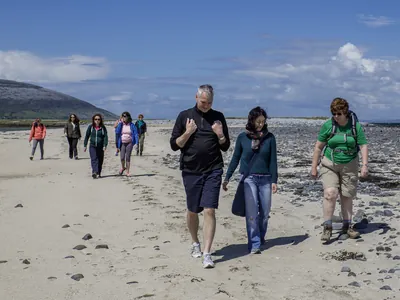
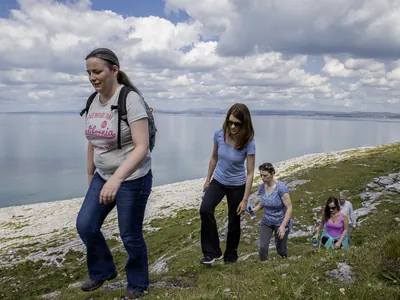
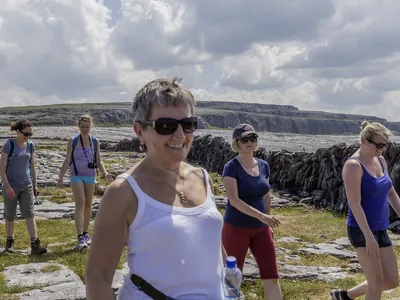
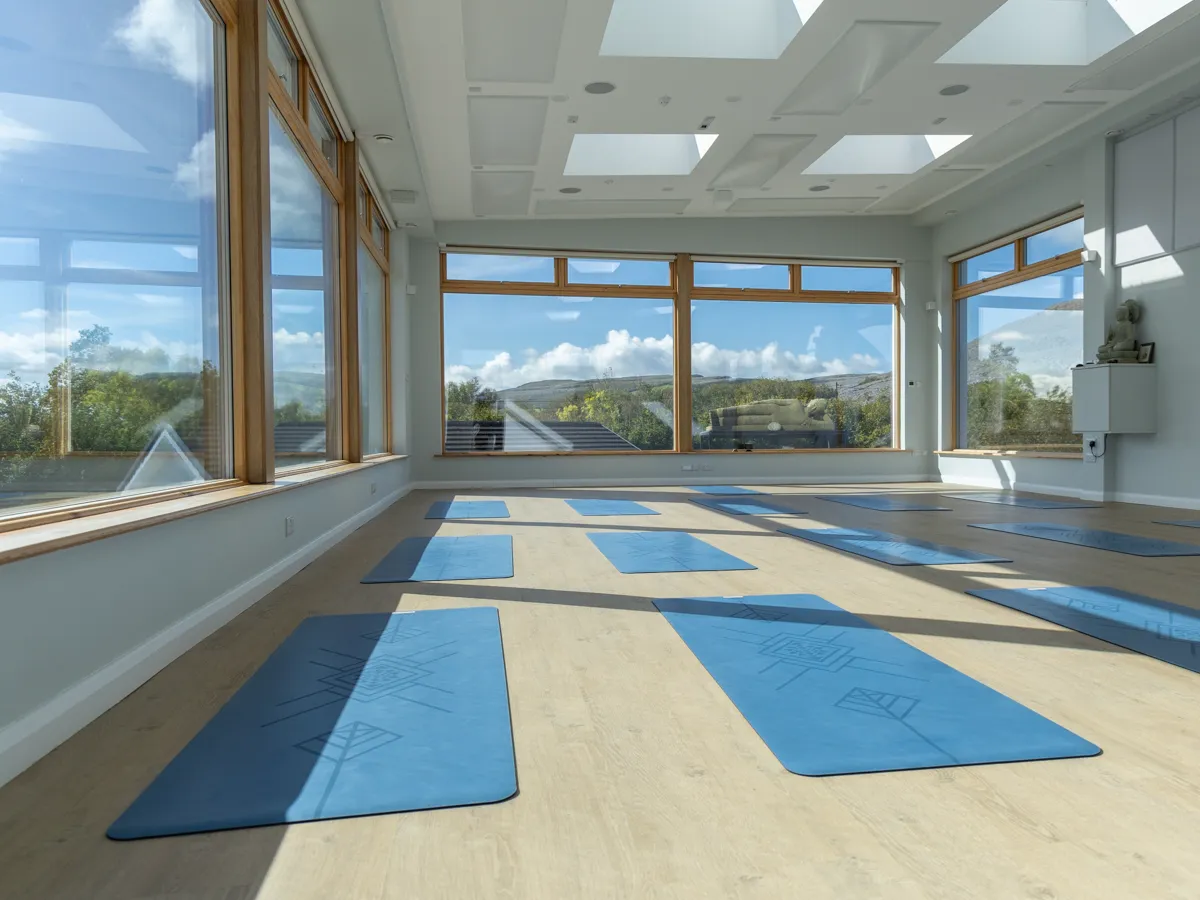
Experience the best retreat of your life with daily yoga & meditation, guided outings into the Burren hills, and our famous vegetarian food. We cater for all levels, from complete beginners to advanced.
Click the ‘Upcoming Retreats’ button to see dates and details